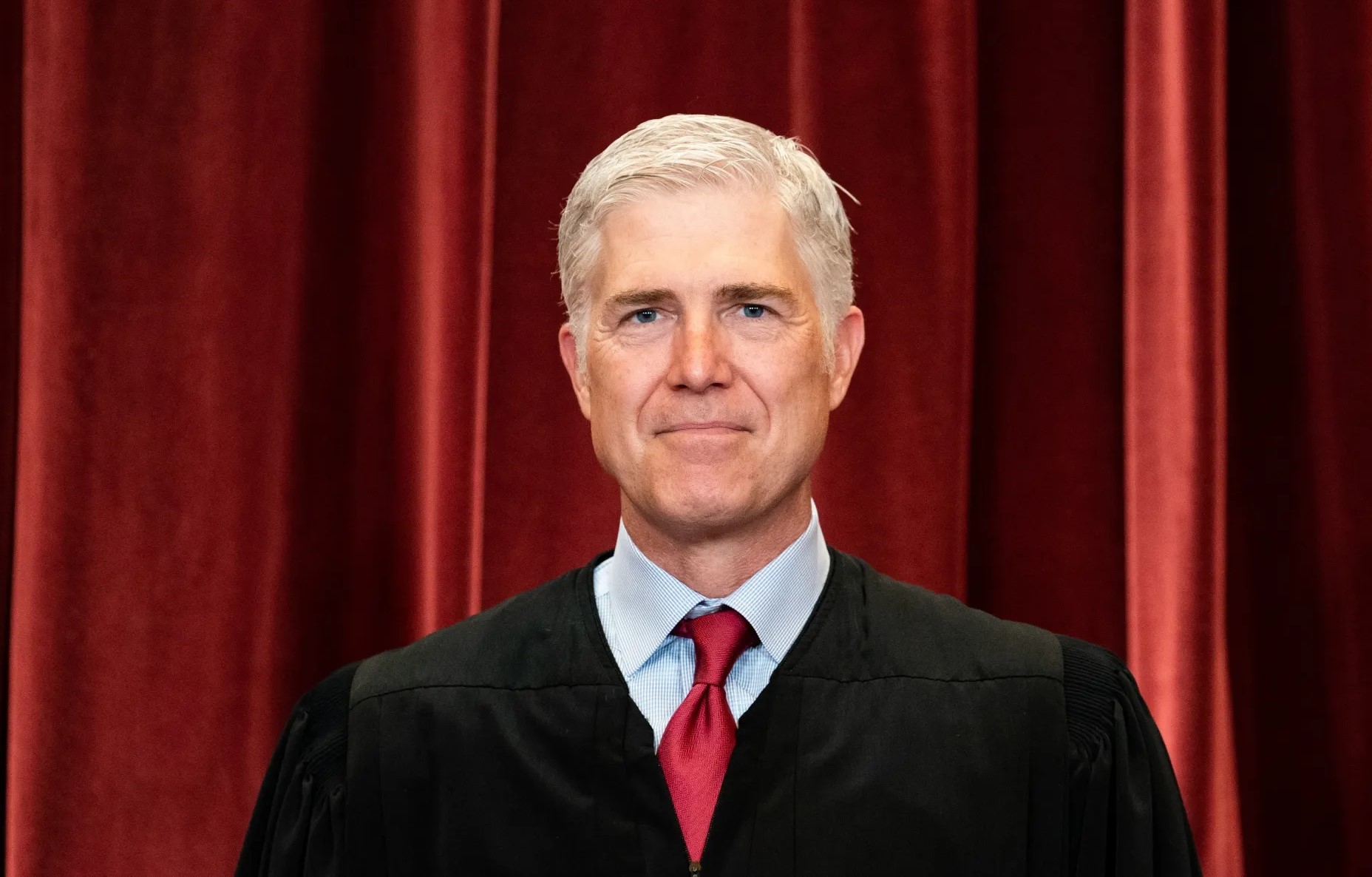
Justice Neil Gorsuch’s unprecedented rebuke of lower courts highlights a growing constitutional crisis in America’s judicial system. The case involving federal funding cuts sparks intense debate over judicial authority and executive power.
A constitutional crisis is brewing within America’s federal court system, with the nation’s highest judicial authority confronting a pattern of defiance from lower courts. This confrontation has reached a breaking point, prompting Justice Neil Gorsuch to issue a rare and scathing warning that has reverberated through the American legal community. His message cuts to the heart of judicial hierarchy and the delicate balance of power between the federal courts and executive authority.
The Explosive Warning That Shook the Federal Judiciary
On Thursday, Justice Gorsuch, a conservative appointee by President Trump, delivered an unexpected and fiery rebuke to lower federal courts. His comments came in the wake of the Supreme Court’s narrow victory for the Trump administration in a case involving federal research funding and diversity programs.
“This marks the third time in a matter of weeks this Court has had to reverse a lower court on an issue it had already addressed,” Gorsuch wrote, expressing his frustration over the repeated defiance. Joined by Justice Brett Kavanaugh, Gorsuch’s words signaled a direct challenge to what appears to be an escalating resistance within the judiciary.
His comments reflect more than just a legal disagreement—they represent a deeper concern about the erosion of the judicial hierarchy that has traditionally ensured the consistent application of law across the nation.
The Case That Triggered Constitutional Confrontation
The catalyst for Gorsuch’s unprecedented rebuke stemmed from a controversial dispute over federal research funding. In a 5-4 decision, the Supreme Court allowed the Trump administration to cut millions of dollars in National Institutes of Health (NIH) grants linked to diversity, equity, and inclusion (DEI) initiatives, as well as gender identity research and COVID-19 studies.
This ruling marked a significant victory for the administration, which has sought to dismantle federal programs it views as ideologically driven. The decision to cut NIH funding based on race or DEI objectives is expected to have a far-reaching impact on how federal research dollars are allocated moving forward.
However, the issue became even more contentious when a federal judge in Massachusetts defied the Supreme Court’s earlier ruling, ordering that NIH grants be reinstated despite the Court’s clear directive. This act of judicial defiance prompted a response from a coalition of 16 Democratic attorneys general and public health groups, who claimed that the administration’s actions were discriminatory against minority and LGBTQ+ researchers.
The Decisive Vote and Judicial Alignment
The Supreme Court’s 5-4 decision revealed the intricate dynamics at play within the highest court. Justice Amy Coney Barrett played a pivotal role in this ruling, providing the deciding vote in a carefully balanced decision. Barrett sided with the conservative justices, including Gorsuch, Clarence Thomas, Samuel Alito, and Kavanaugh, in terminating the NIH grants, signaling a commitment to dismantling DEI-related programs.
However, Barrett also joined Chief Justice John Roberts and the three liberal justices—Sonia Sotomayor, Elena Kagan, and Ketanji Brown Jackson—on a separate matter, leaving intact the lower court’s decision to strike down NIH’s policy guidance documents. This split decision highlights Barrett’s role as a swing vote on complex issues, where she appears to differentiate between direct funding decisions and broader policy communications.
The liberal justices, unified in their opposition, argue that the administration’s policies constitute systematic discrimination against minority communities, a view that sharply contrasts with the conservative majority’s stance.
Pattern of Defiance: A Systematic Challenge to Supreme Court Authority
Justice Gorsuch’s rebuke was not limited to this single case. He pointed out that the Massachusetts district court’s defiance was part of a broader pattern of lower courts resisting Supreme Court orders. Gorsuch emphasized that this was not an isolated incident, referencing two other recent cases where lower courts actively defied Supreme Court rulings.
In one case, the Supreme Court had ruled 7-2 to block a district court’s attempt to override the high court’s decision allowing the Trump administration to resume third-country deportations. Gorsuch’s frustration is clear, as he addresses the growing sense that lower courts are undermining Supreme Court authority, either through misunderstanding or deliberate defiance.
Constitutional Principles and Judicial Hierarchy
Gorsuch’s warning goes beyond legal disputes; it is a call to protect the integrity of the American legal system. In his concurrence, he invoked constitutional principles that have guided American governance for over two centuries. He emphasized the importance of judicial hierarchy, stating that “judges are duty-bound to respect the hierarchy of the federal court system created by the Constitution and Congress.”
This call to uphold the hierarchy is not merely a legal argument—it is a defense of the constitutional structure that ensures the consistent application of law across the nation. Without respect for judicial hierarchy, the legal system risks becoming fragmented, undermining its effectiveness and predictability.
The DEI Battlefield: Policy and Constitutional Implications
The case at hand reflects broader political and cultural battles, particularly over diversity, equity, and inclusion (DEI) initiatives. Since taking office in January 2025, President Trump has signed executive orders aimed at dismantling DEI programs, framing them as “radical” and “discriminatory.”
This ideological clash is not only a policy debate but also a constitutional one, as it raises questions about the role of the federal government in shaping social and cultural norms. The Supreme Court’s decision to support the Trump administration’s cuts to DEI funding is a key moment in this ongoing battle, as it signals a shift in how federal funding will be allocated based on race and identity.
The District Court’s Defiant Stand
U.S. District Judge William Young, who ruled in the Massachusetts case, represents a particular strain of judicial resistance. His sharp language and ideological commitment reflect a belief that the role of the judiciary is to protect certain communities and causes, even if it means defying higher court rulings.
In his decision, Young described the funding cuts as “discrimination” against racial minorities and LGBTQ+ communities, framing the case as a moral and political issue rather than purely a legal one. This approach further deepens the ideological divide within the federal judiciary and underscores the tensions between judicial independence and executive authority.
Administrative State and Executive Authority
The broader context of this case involves questions about the role of the executive branch and the administrative state. The Trump administration’s efforts to exert control over federal agencies and reshape policy reflect a growing belief in the unitary executive theory, which asserts that the president must have control over all executive operations.
Lower court resistance to these actions suggests a fundamental disagreement over presidential authority and the proper role of federal agencies in shaping public policy. The Supreme Court’s decisions in favor of the administration reflect the legal and constitutional principles that the Court believes are vital to maintaining the balance of power.
Conclusion: Constitutional Order in the Balance
Justice Gorsuch’s unprecedented warning to lower courts is a reflection of the growing concerns over the integrity of the American legal system. The defiance of lower courts against Supreme Court rulings represents a direct challenge to the judicial hierarchy that has underpinned American democracy for centuries.
As the constitutional confrontation continues to unfold, the resolution of this crisis will likely set critical precedents for the future of judicial authority, executive power, and the rule of law. The outcome will shape not only the immediate legal disputes but the long-term structure of American governance, as the federal judiciary confronts the delicate balance between legal interpretation, political ideology, and constitutional principles.