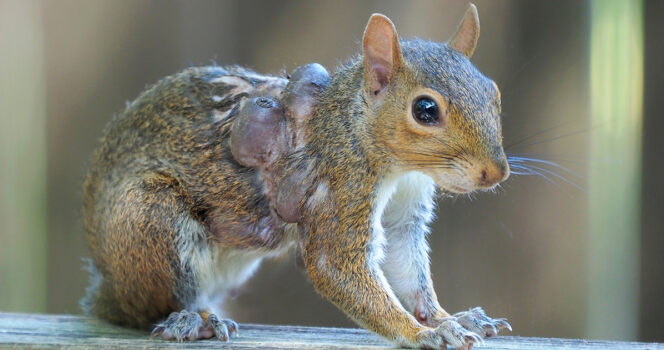
Experts urge people to avoid handling squirrels with strange lumps caused by botflies, warning that attempting to help can cause harm. Learn more about this parasitic infection and how to help wildlife safely.
An animal rescue center in Virginia is urging people to think twice before intervening when they spot squirrels with strange lumps on their skin. While these swollen bumps might look like a disease, experts say they are caused by a parasite called a botfly.
This new warning comes shortly after bizarre images of rabbits with horn-like growths went viral in the U.S. However, this time, it’s squirrels that are making headlines. As autumn approaches, sightings of these squirrels, often referred to as “zombie squirrels” due to their appearance, increase, prompting concerns from wildlife experts.
What Are Botflies and How Do They Affect Squirrels?
Evelyn’s Wildlife Refuge, a non-profit organization in Virginia, has been posting warnings about botfly infestations for years. The group explains that these parasites are responsible for the alarming lumps that can appear on squirrels’ fur. But don’t be fooled by the grotesque appearance — these bumps aren’t caused by injury or overeating. Instead, they’re the result of botfly larvae burrowing beneath the skin.
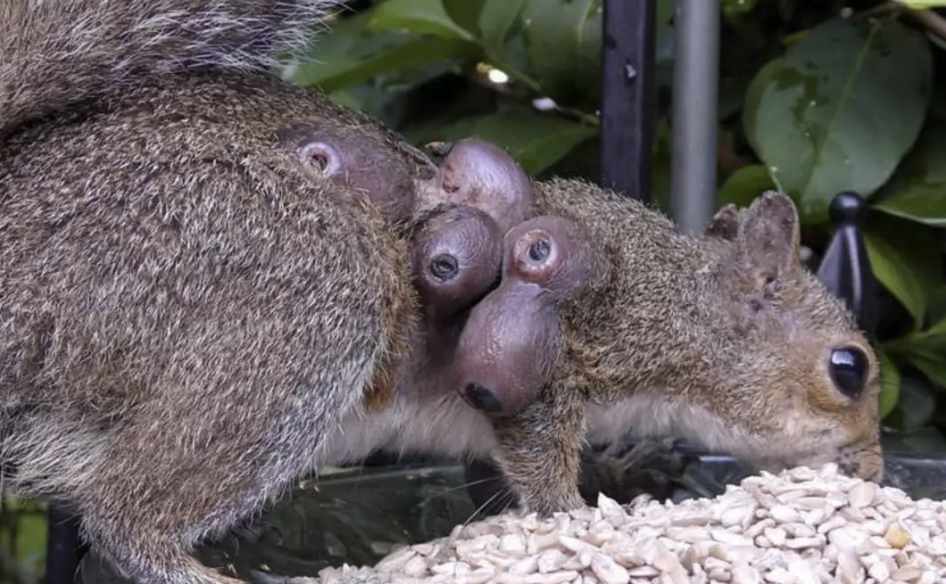
Botflies, which belong to the Oestridae family, target a wide range of animals. Though squirrels are among the most visible victims, other animals like cats, dogs, rabbits, raccoons, and chipmunks can also be affected.
The botfly life cycle begins when the adult fly lays its eggs on the fur of an animal. Once the eggs hatch, the larvae burrow into the skin or enter through the nose or mouth. As they grow, they form the large, swollen lumps that can be seen from a distance. Once the larvae mature, they push their way out of the host’s body, fall to the ground, and bury themselves in the soil, where they will eventually emerge as adult flies.
Botfly Infestation vs. Squirrel Pox: What’s the Difference?
While a botfly infestation may look disturbing, it generally doesn’t harm the animal. Most animals can survive the ordeal, though the larvae can cause discomfort and distress. The true danger, however, lies in humans attempting to remove the parasites. The rescue center cautions that only skilled rehabbers or veterinarians should attempt to remove the larvae. Trying to remove them without proper training can result in severe consequences, such as anaphylactic shock or even death, if the larvae’s body is compromised during extraction.
The rescue group also clarified the difference between botfly infestations and squirrel pox, a viral infection. Squirrel pox is another condition that causes bumps on a squirrel’s body but is typically less severe and resolves on its own. Unlike botfly lumps, squirrel pox is spread between squirrels, often at feeders.
How to Help Wildlife in Need
If you encounter a squirrel or other wildlife with visible lumps or signs of a botfly infestation, experts recommend that you avoid trying to remove the parasites yourself. Instead, reach out to a licensed wildlife rehabilitator or veterinarian who is trained to handle these situations safely.
By doing so, you’ll ensure that the animal receives the proper care it needs without causing further harm.