
After delivering a stark warning to Russia at a NATO summit, Pete Hegseth’s jet was forced to make an emergency landing due to a depressurization issue. Find out what happened and how the incident unfolded.
In a dramatic turn of events, US Secretary of War Pete Hegseth found himself facing an unexpected emergency landing just hours after delivering a strong message to Russian President Vladimir Putin at a NATO summit in Brussels.
Hegseth had just concluded a high-stakes NATO meeting when his Boeing C-32A aircraft encountered a serious issue while returning to the United States. The plane, which was flying over the Atlantic, developed a crack in the windshield, leading to concerns about depressurization. As a result, the plane was diverted and made an unscheduled landing at RAF Mildenhall in Suffolk, UK, around 7 pm on October 15.
The Pentagon confirmed that everyone aboard, including Secretary Hegseth, was safe. Pentagon spokesman Sean Parnell shared the update on X (formerly Twitter), stating that the plane landed following standard procedures and that all passengers were unharmed.
Hegseth’s Stark Warning to Russia Before the Emergency Landing
Before the unexpected flight disruption, Hegseth had delivered one of the strongest warnings to Russia in recent months. Speaking at the NATO summit, he made it clear that the US and its allies were prepared to take further action against Russia if the country continued its aggression.
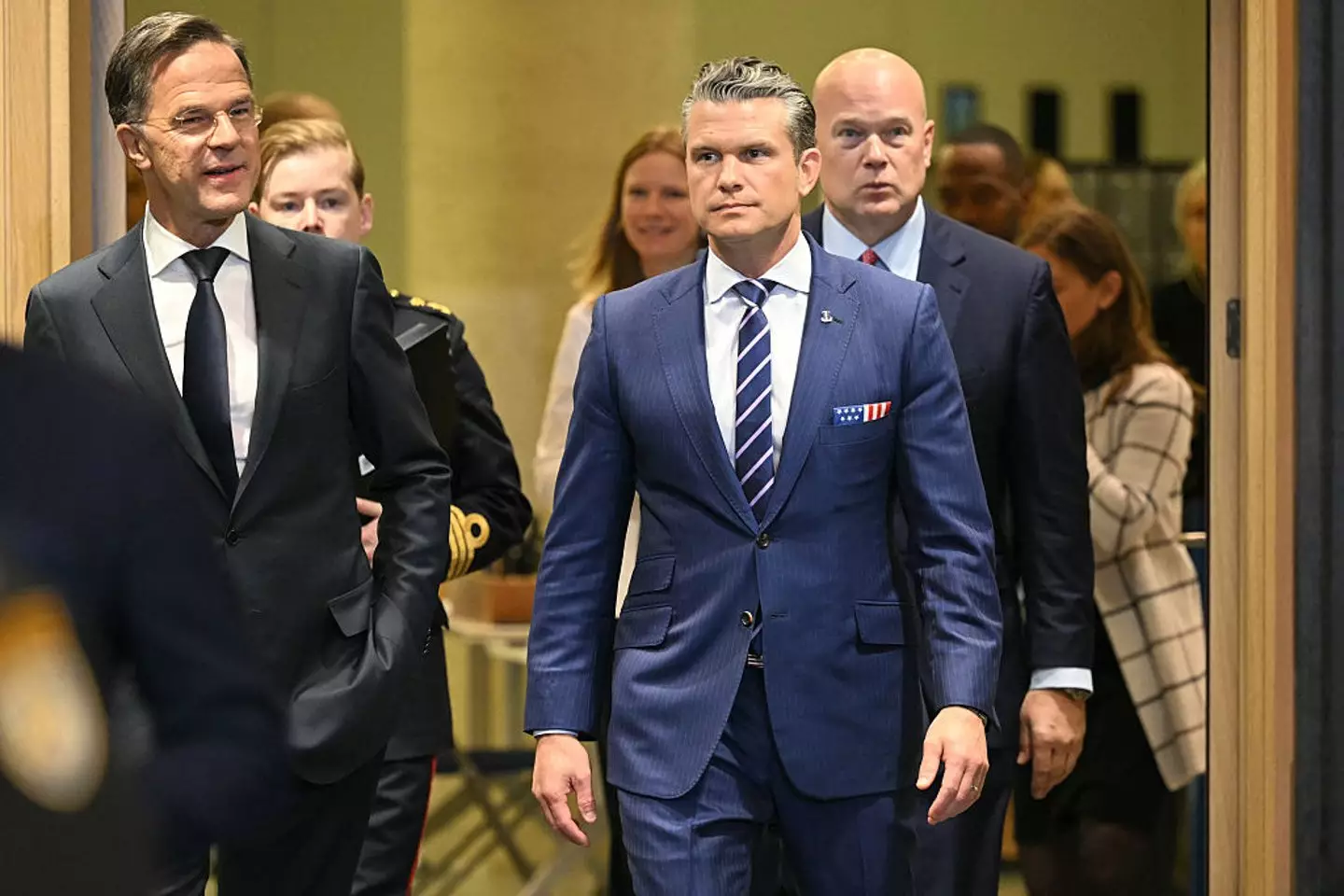
“We will take steps necessary to impose costs on Russia for its continued aggression,” Hegseth said, signaling a shift in America’s approach to the ongoing conflict. His hardline language suggested that the US, under the Trump administration, had changed its stance and was now focusing on a stronger, more capable NATO presence in Europe.
While NATO allies had previously expressed concerns about a possible shift in US policy, Hegseth’s words were seen by many, particularly in Eastern Europe, as a reaffirmation of America’s commitment to NATO and its security interests. Estonia’s defense minister, Hanno Pevkur, praised the US for its unwavering support, calling it a “true ally.”
The Emergency Landing: What Happened?
As Hegseth’s plane was making its way back to the US, the aircraft experienced a crack in its windshield, triggering depressurization concerns. The plane landed safely at RAF Mildenhall, following standard emergency procedures.
Hegseth took to X after the incident to reassure the public, posting: “All good. Thank God. Continue mission!”
All good. Thank God. Continue mission! https://t.co/kCMmfOvHLX
— Pete Hegseth (@PeteHegseth) October 15, 2025
Despite the technical malfunction, the timing of the emergency landing has raised eyebrows, as it occurred amid growing concerns over flight disruptions in Europe. Several military and diplomatic flights have reported incidents of GPS jamming in recent weeks, which some believe could be linked to Russian electronic warfare systems. These include incidents involving European Commission President Ursula von der Leyen and Spanish defense minister Margarita Robles.
Hegseth’s Position on Russia and NATO: Allies React
Hegseth’s remarks at the NATO summit were met with mixed reactions from European allies. While some, like Estonia’s Pevkur, expressed strong approval of the US’s commitment to NATO, others remained more cautious. Germany’s defense minister, Boris Pistorius, commented that the speech reflected “a change of perspective and approach,” but did not signify a major shift in policy just yet.
Despite the mixed reactions, Hegseth’s message was clear: the US is standing firm in its commitment to counter Russia’s actions, and NATO’s presence in Europe will remain strong and resolute.
What’s Next for NATO and US-Russia Relations?
While the emergency landing was a dramatic moment, it did little to dampen Hegseth’s resolve. As tensions between Russia and the West continue to rise, the US is likely to continue its tough stance. NATO will undoubtedly play a crucial role in shaping the geopolitical landscape, and Hegseth’s comments signal a commitment to a stronger, more unified defense strategy.