Bad Bunny responds to criticism over his Super Bowl LIX halftime show gig following ICE backlash. Learn about the controversy and his defiant comments on SNL, and why his performance is a cultural milestone.
Bad Bunny has become the center of controversy following his announcement as the headliner for the Super Bowl LIX halftime show, scheduled for February 8, 2026, at Levi’s Stadium in Santa Clara, California. The Puerto Rican superstar’s decision to take the stage has ignited a heated debate, fueled by criticism from figures such as Homeland Security Secretary Kristi Noem and Republican critics.
Despite previous remarks distancing himself from the U.S. and the use of Immigration and Customs Enforcement (ICE) under the Trump administration, Bad Bunny is now using his platform to shut down the backlash in his signature style.
What Is the Controversy Surrounding Bad Bunny’s Super Bowl Appearance?
Bad Bunny, whose real name is Benito Antonio Martínez Ocasio, has been a vocal critic of the U.S. government, particularly the actions of ICE. The 31-year-old reggaeton artist had previously chosen not to perform in the U.S. due to concerns over the Trump administration’s aggressive immigration policies. In a 2024 interview with i-D magazine, he explained, “There were many reasons why I didn’t show up in the U.S., and none of them were out of hate.”
However, his decision to headline the Super Bowl halftime show has sparked backlash from some quarters, particularly those aligned with right-wing politics. Kristi Noem, the Secretary of Homeland Security, remarked that ICE agents would be “all over” the Super Bowl event, underscoring the tension between the U.S. government and the Latinx community.
ICE and Political Backlash
Noem’s comments came after she was asked about the NFL’s decision to feature Bad Bunny, to which she replied, “Well, they suck.” Her statement, combined with the fact that ICE will be present during the event, raised concerns about the treatment of immigrants and the growing political polarization surrounding the halftime show.
Additionally, Corey Lewandowski, a key adviser at the Department of Homeland Security, called the NFL’s decision to choose Bad Bunny “shameful,” claiming that the artist “hates America.” These remarks only fueled the ongoing debate, with critics arguing that Bad Bunny’s past stance on U.S. immigration policy was incompatible with representing the country on such a significant stage.
.jpg)
Bad Bunny’s Defiant Response on SNL
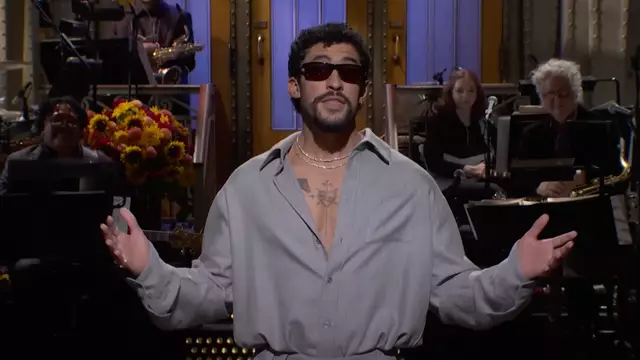
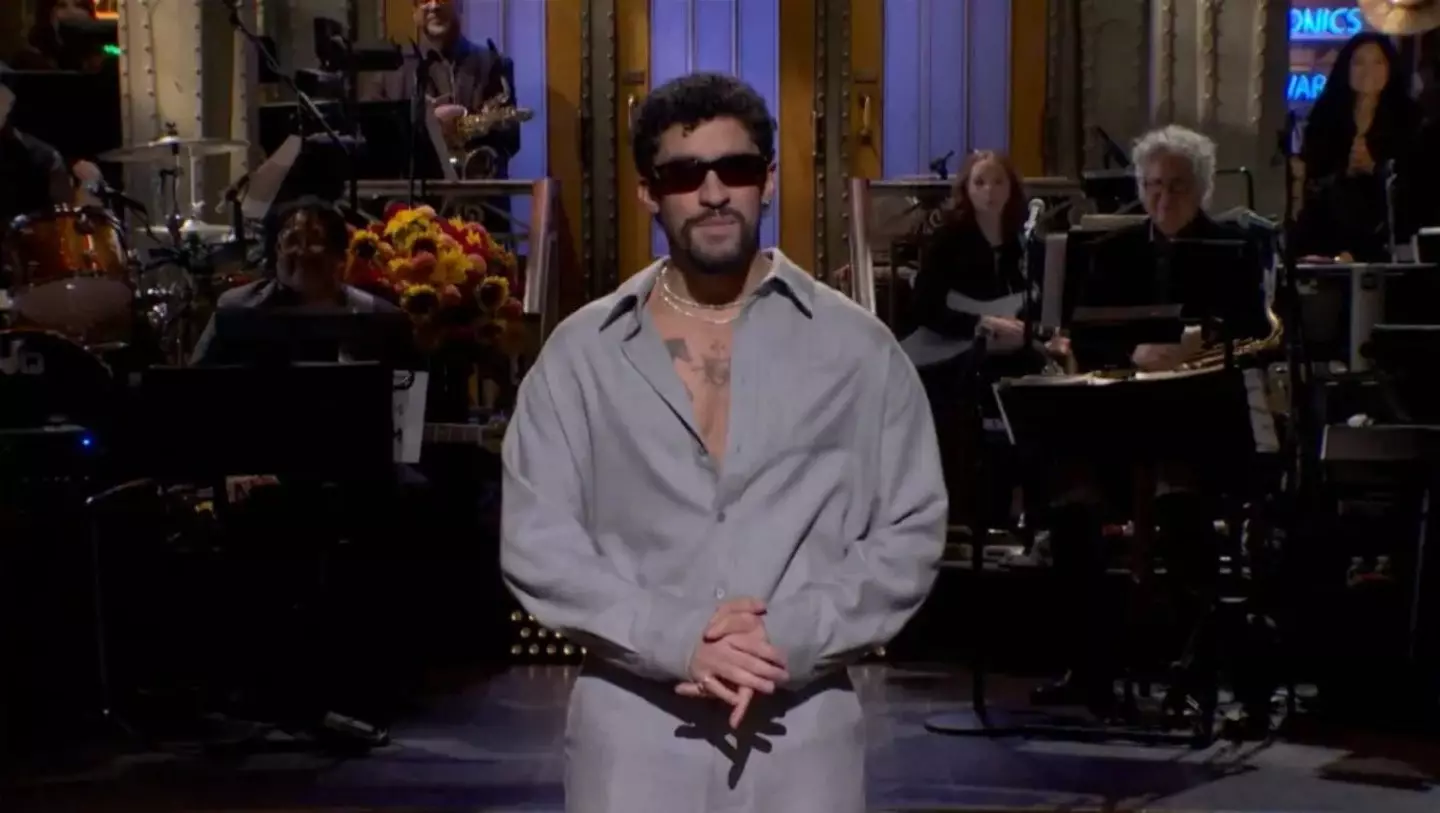
In response to the criticism, Bad Bunny used his platform on Saturday Night Live (SNL) on October 4, 2024, to address the controversy directly. In a sarcastic monologue, he declared, “I’m doing the Super Bowl halftime show and I’m very happy. And I think everyone is very happy about it. Even Fox News.”
The audience cheered as Bad Bunny continued, saying: “I’m very excited to be doing the Super Bowl, I know that people all around the world who love my music are also happy, especially all of the Latinos and Latinas in the world here in the United States who have worked to open doors.” He then added, “It’s more than a win for myself; it’s a win for all of us.”
In Spanish, he further emphasized the significance of the opportunity, saying, “Our footprints and our contribution in this country, no one will ever be able to take that away or erase it.”
Super Bowl’s Cultural Impact and Criticism
Despite the controversy, Bad Bunny’s support among his fans remains unwavering. Many have taken to social media to express their excitement, with one fan tweeting, “Duolingo for the Gringos, ya’ll got 4 months to learn!!!” Others are excited for the upcoming performance, with one commenter writing, “Benitobowl in 4 months!”
The decision to book Bad Bunny for the Super Bowl halftime show highlights the cultural significance of the event. As Imani Cheers, an associate professor of digital storytelling at George Washington University, pointed out, “The Super Bowl has in recent years really become a real cultural moment for the country to come together, and [it] provokes a lot of conversation, whether you’re a football fan or not.”
Conclusion: Bad Bunny and the Future of Representation in the Super Bowl
Bad Bunny’s upcoming Super Bowl performance is more than just a musical moment; it’s a cultural statement. While some continue to criticize his selection, others see his inclusion as a victory for representation and inclusivity, particularly for the Latinx community in the United States. As the controversy continues, it is clear that Bad Bunny’s performance will be a defining moment in Super Bowl history.