A million-year-old human skull discovered in China may challenge what we know about human evolution. Researchers suggest it could belong to an ancient species linked to Homo sapiens’ origins outside Africa.
Million-Year-Old Human Skull Could Rewrite the Timeline of Human Evolution
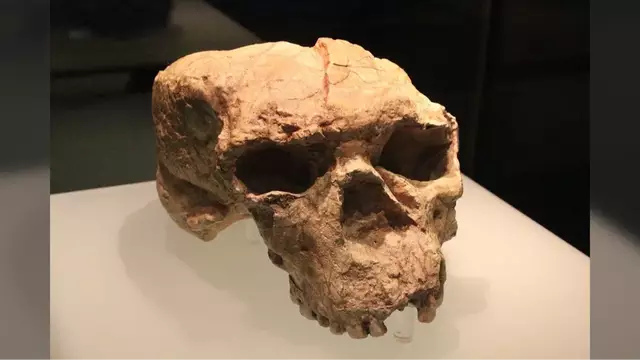
A breakthrough study has revealed that a million-year-old skull could dramatically change our understanding of human evolution. The skull, known as Yunxian 2, was discovered in 1990 in the Yunazian region of Hubei province, China. Initially thought to belong to Homo erectus, new research now suggests that it may belong to a different species altogether: Homo longi.
This shift in perspective could suggest that Homo sapiens—modern humans—may have originated outside of Africa, a significant reversal of the long-held belief that humans first appeared there.
Yunxian 2 Skull: A New Perspective
The Yunxian 2 skull was originally classified as Homo erectus based on its large brain case, jutting lower jaw, and other primitive human traits. However, new analysis of the skull’s shape, braincase, and teeth suggests that it may be more closely related to Homo longi, a species linked to the Denisovans—an ancient human group that lived alongside early Homo sapiens.
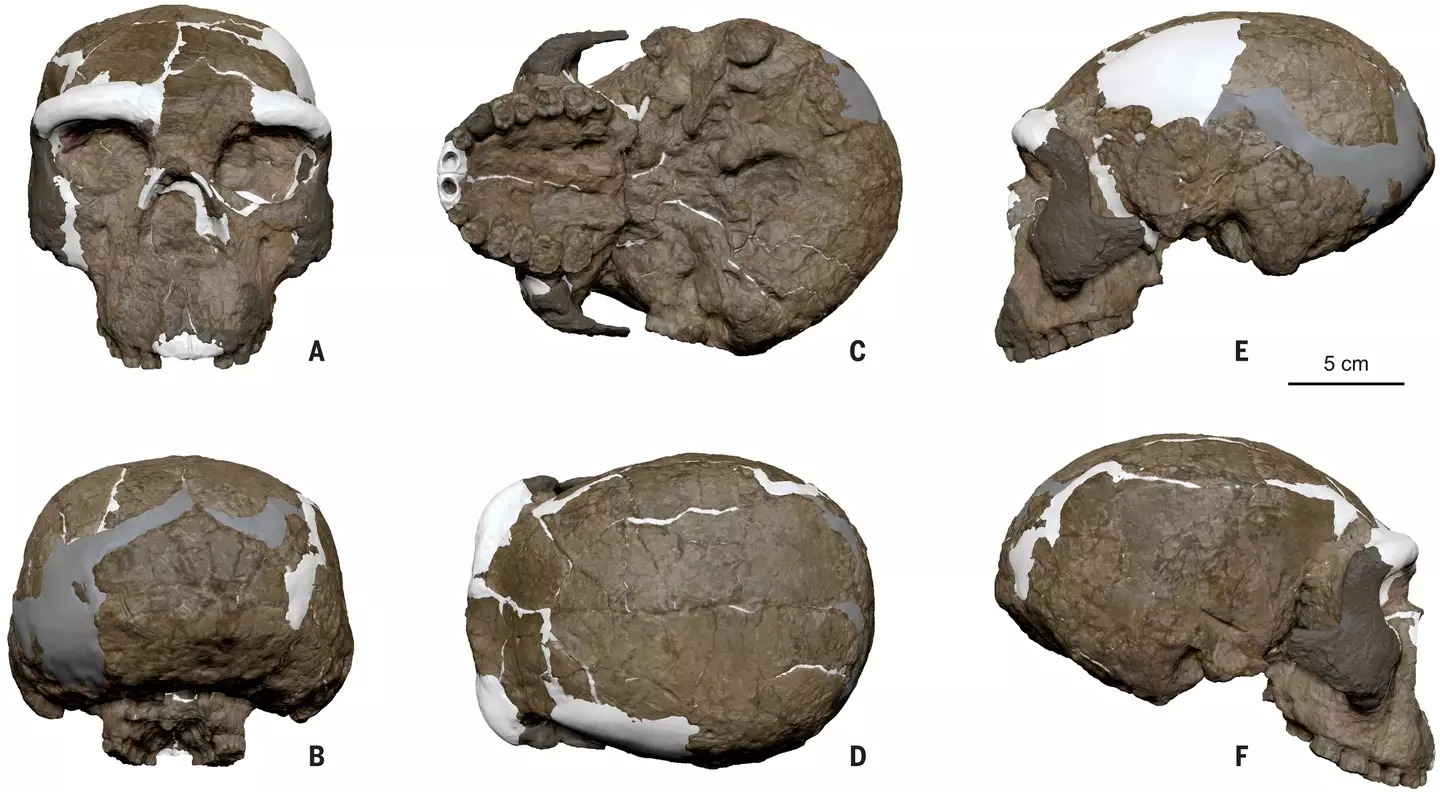
By applying modern imaging techniques and digital reconstruction methods, researchers have been able to form a new understanding of the skull’s features. If the hypothesis proves true, the Yunxian 2 skull could represent the earliest divergence between Homo sapiens, Neanderthals, and Denisovans—possibly pushing back the split between these groups by at least 400,000 years.
Rewriting the Evolutionary Timeline
This discovery would significantly alter our historical understanding of the last million years of human evolution. If confirmed, it could suggest that the first Homo sapiens did not originate in Africa as previously believed but may have emerged in Western Asia instead.
Professor Chris Stringer, an anthropologist and leader of human evolution research at the Natural History Museum in London, commented: “This changes a lot of thinking because it suggests that by 1 million years ago, our ancestors had already split into distinct groups. This points to a much earlier and more complex human evolutionary split than previously believed.”
He continued: “It more or less doubles the time of origin of Homo sapiens.”
The Role of Modern Technology
The study involved advanced CT imaging and sophisticated digital techniques, which allowed scientists to create a new virtual reconstruction of the skull. Professor Stringer sees this as a landmark step toward resolving the “muddle in the middle” that has puzzled paleoanthropologists for decades.
Dr. Frido Welker, an associate professor of human evolution at the University of Copenhagen, praised the new research: “It’s exciting to have a digital reconstruction of this important cranium available. If confirmed by additional fossils and genetic evidence, the divergence dating would be surprising indeed.”
The Future of Human Evolution Research
This discovery opens up exciting new possibilities in the study of human origins. Further analysis, including genetic testing, may help confirm whether the Yunxian 2 skull truly represents a separate branch of human evolution or if it’s linked to a different, yet-to-be-discovered species. Either way, it is clear that the story of human evolution is far more complex and diverse than previously thought.