Donald Trump’s recent announcement to deploy the National Guard and give police broad powers in Washington, D.C. has ignited backlash, with critics calling for impeachment. His comments have raised legal and ethical concerns.
Donald Trump’s latest plan to “clean up” Washington, D.C. has stirred a fierce backlash and reignited calls for impeachment. On Monday, the president unveiled a drastic strategy aimed at tackling crime in the U.S. capital, declaring that there would be no “Mr. Nice Guy” approach. Among the controversial measures, Trump ordered the homeless population to “move out IMMEDIATELY” and authorized a 30-day federal intervention, with the National Guard taking over the city’s Metropolitan Police Department.
Controversial Police Powers
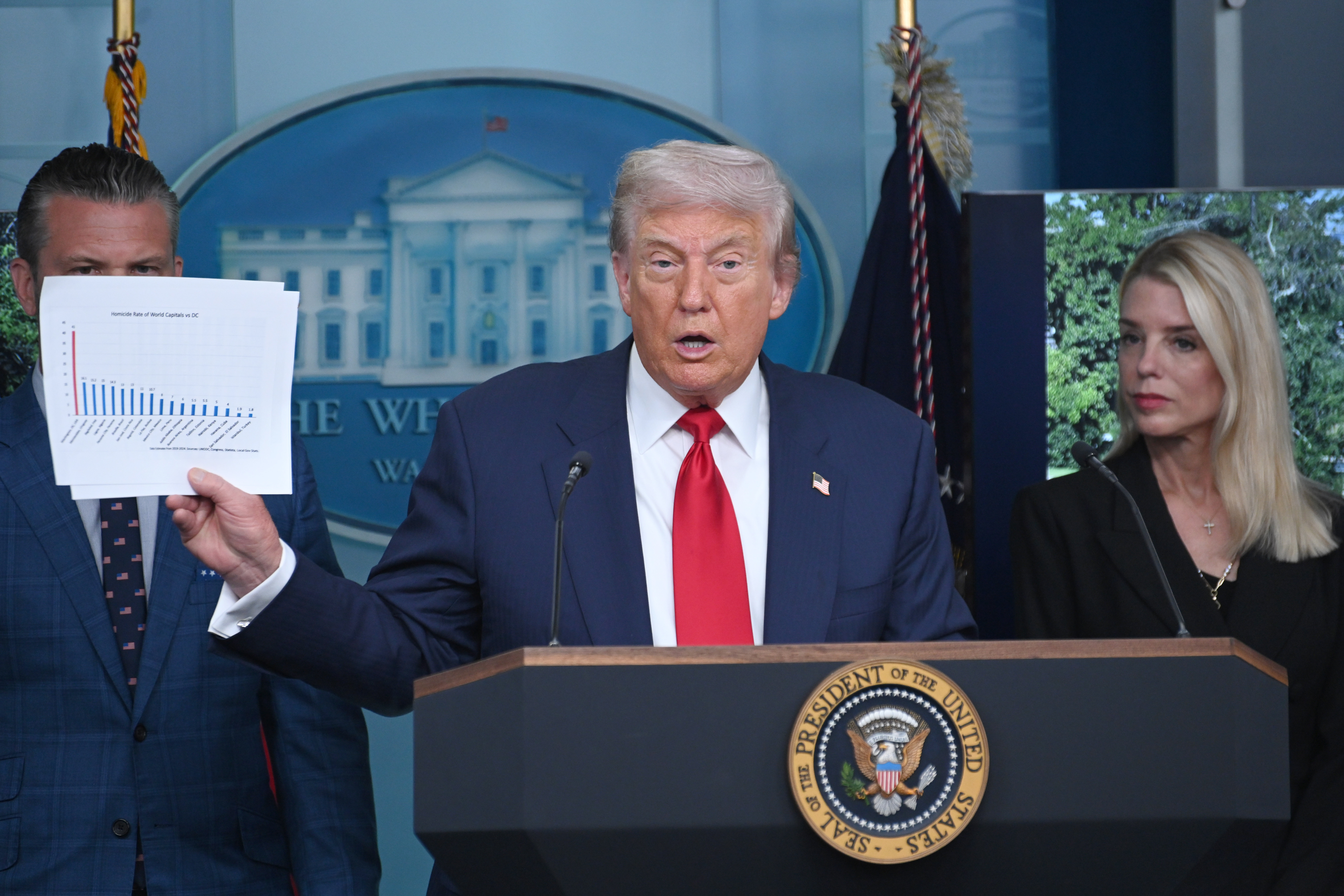
In his announcement on Truth Social, Trump framed D.C. as a city overtaken by “lawlessness,” describing it as a “sanctuary for illegal alien criminals.” He claimed the homicide rates in D.C. outpaced cities like Bogotá and Mexico City, despite official data showing a 30-year low in violent crime. To justify the federal intervention, Trump invoked Section 740 of the District of Columbia Home Rule Act, which allowed him to send in 800 National Guard troops to patrol the streets.
The most controversial aspect of the plan was Trump’s declaration that police officers would have the freedom to “do whatever the hell they want” when confronted with hostility. “That’s the only language they understand,” he told reporters. “You spit, and we hit, and they can hit real hard.”
Critics Call the Plan Authoritarian
D.C. Mayor Muriel Bowser labeled the move “unsettling and unprecedented,” though she noted that it wasn’t entirely surprising given Trump’s past rhetoric. Critics online were quick to condemn the plan as authoritarian, with one Reddit user writing, “The Trump police state is upon us.” Others criticized the remarks as “evil” and warned that they could pave the way for increased police violence, normalizing the idea that law enforcement officers need “special permission to break skulls.”
Legal experts have raised concerns about the implications of granting such unchecked power to police officers. Critics argue that this is a dangerous step toward authoritarianism, where law enforcement actions are normalized without accountability.
Legal Challenges and State Rights
Trump’s decision to deploy the National Guard also comes amidst a legal challenge over a similar move during immigration protests in Los Angeles in June 2025. California officials argued that the deployment violated the foundational principle that states control their own National Guard units. They labeled the federal move as “a clear violation of the most fundamental principles of our Nation’s founding.”
Despite the controversy, the Trump administration maintains that the actions were legal under existing statutes. Trump himself has framed the D.C. intervention as a “liberation day,” stating, “We’re going to take our capital back.”
What’s Next for D.C. and the National Debate
Trump’s plan has sparked intense debate over the balance between public safety and individual rights. Supporters argue that his tough stance is needed to restore order in a city they view as overrun with crime, while critics fear it will lead to an erosion of civil liberties and the normalization of excessive force by law enforcement.
As the situation develops, the impact on D.C. residents, the National Guard’s role, and the broader national discourse on police powers remain uncertain. The situation is already drawing parallels to other police-state tactics seen in autocratic regimes, fueling further concern about the future of law enforcement in America.