Donald Trump’s recent statement that “without the United States, everything in the world would die” has left many stunned. Learn more about his comments on global power, tariffs, and peace efforts.
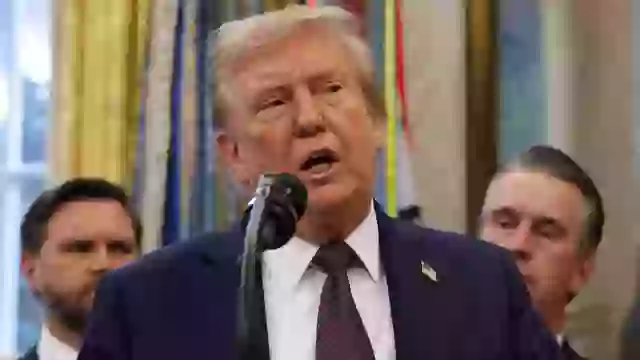
Donald Trump has sparked controversy after boldly claiming that “without the United States, everything in the world would die,” a statement that has left many shocked and puzzled.
The comment came during a press conference on September 2, where Trump was discussing the relocation of the US Space Command from Colorado to Alabama. While much of the media focus was on his health—amid rumors circulating about his well-being—the president made several statements that left people talking, especially regarding the power of the United States on the global stage.
When asked about rumors suggesting that he had passed away over the weekend, Trump dismissed the claims, stating, “I didn’t see that. Last week, I did numerous news conferences, and they went very well.” He expressed frustration at the lack of media coverage on his press conferences, contrasting it with President Biden’s absence from public events.
However, it was Trump’s bold remarks on global power that truly turned heads. “Without the United States, the whole world would die,” he said, emphasizing the strength and importance of the country. “It’s so powerful, it’s so big. I made it really big in the first four years.”
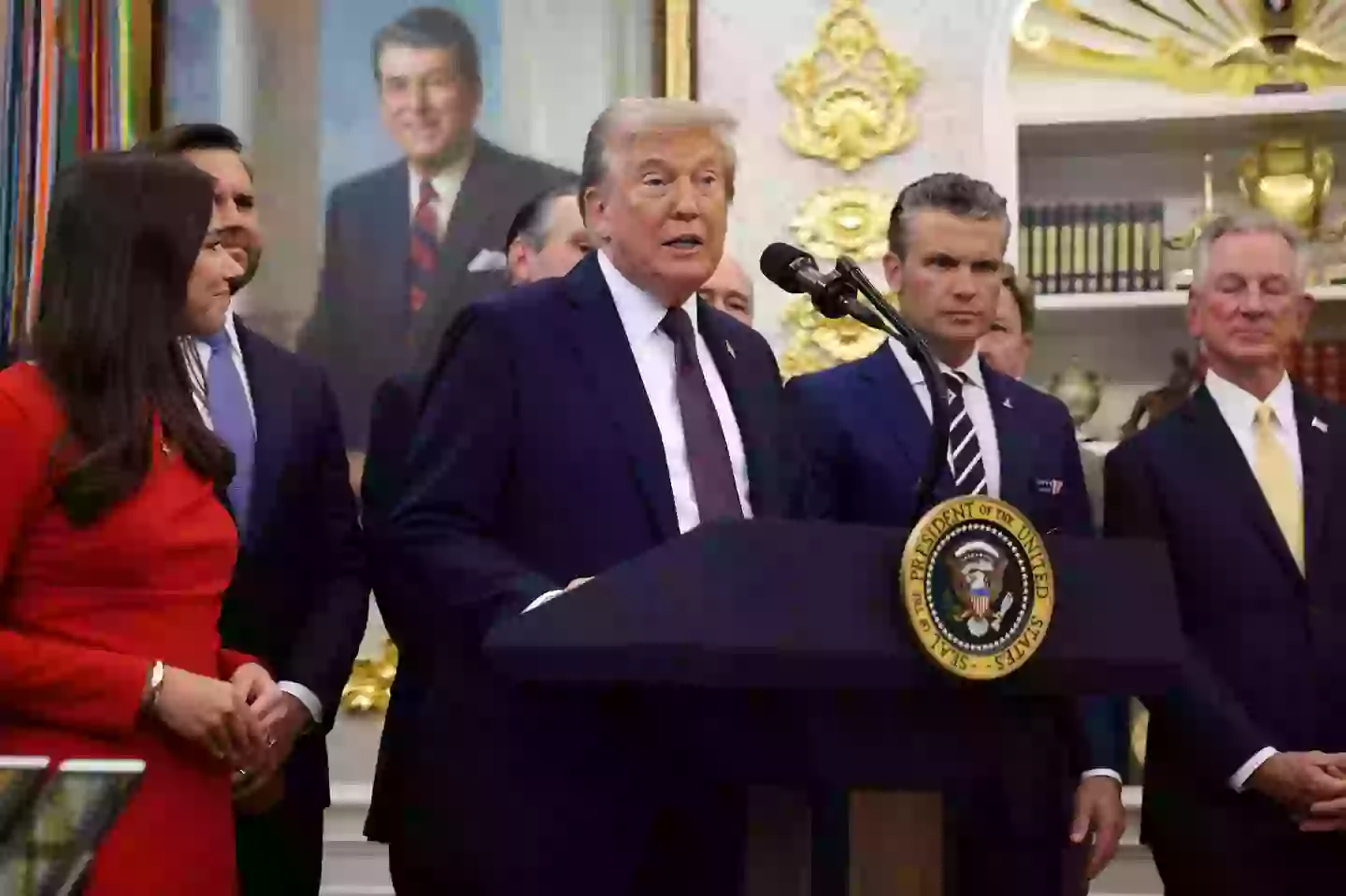
Trump claimed that under President Biden’s leadership, the country had started to “degenerate” but that he was working to “build it up to a level I never thought we’d be at this quick.” According to Trump, the U.S. is now the “hottest” and “the best financially” thanks to his economic policies, particularly the tariffs he implemented during his term.
“The money coming in is so big because of tariffs,” Trump asserted. He also referenced his role in resolving multiple conflicts, stating, “I settled seven wars,” a claim that has since drawn scrutiny. Some of these conflicts, including those involving Israel and Iran or India and Pakistan, were described by experts as ongoing, rather than fully resolved.
Trump also made the bold claim that his efforts brought peace to several regions, with his administration listing these supposed “settled” conflicts as Israel and Iran, Rwanda and the Democratic Republic of the Congo, Armenia and Azerbaijan, Thailand and Cambodia, India and Pakistan, Egypt and Ethiopia, and Serbia and Kosovo.
While some experts, such as Michael O’Hanlon from Brookings, have credited Trump for playing a role in the Middle East ceasefire, others remain skeptical. Larry Haas, a senior fellow at the American Foreign Policy Council, sharply disagreed, saying, “I very strongly disagree with the notion that the president brought peace to Iran and Israel.”
Many of the other supposed resolutions Trump cited, such as those involving India and Pakistan or Egypt and Ethiopia, have been met with skepticism from international relations experts, who argue that the conflicts are far from settled.
The president’s remarks on the power of the U.S. and his claim of settling international conflicts have stirred debate online, with some Reddit users calling his statements “completely nuts” and “delusional.” These comments have reignited discussions on Trump’s legacy and his understanding of global affairs, leaving many questioning the accuracy and intent behind his words.
As the debate over Trump’s claims continues, it’s clear that his statements have sparked conversation and controversy, not just on the national stage but around the world.