
Experts issue a dire warning about the world’s largest iceberg, A23a, which is rapidly deteriorating and could have catastrophic consequences for ecosystems, including penguin habitats on South Georgia Island.
World’s Largest Iceberg A23a Drifting Toward South Georgia, Experts Issue ‘Catastrophe’ Warning
A massive iceberg, visible from space, is sending alarm bells ringing among scientists, who are warning of potentially catastrophic consequences. Known as A23a, this colossal glacial mass is currently drifting across the Antarctic Ocean, roughly the size of a Hawaiian island, and its rapid deterioration is raising global concerns.
Standing taller than London’s Shard building at 310 meters, A23a has been steadily shrinking since it broke away from Antarctica in 1986. Recent satellite images show pools of water on the surface, signaling the iceberg’s fast decay. Sections of the ice are falling off and sinking into the ocean, a worrying trend that could signal more significant environmental shifts ahead.

A23a’s Impact on Antarctica and Beyond
Researchers from the Australian National University, in their Nature study report, warned that the rapid changes occurring in Antarctica’s ice, oceans, and ecosystems may have irreversible effects. Lead author, Professor Nerilie Abram, highlighted the alarming implications of A23a’s collapse, stating it would lead to “catastrophic consequences for generations to come.”
Abram further emphasized that Antarctica is already witnessing dramatic shifts in its environment, with warming temperatures accelerating these changes. “Rapid change has already been detected across Antarctica’s ice, oceans, and ecosystems, and this is set to worsen with every fraction of a degree of global warming,” she said.
The iceberg’s movements are being closely monitored by the British Antarctic Survey, who predict that A23a will soon reach the continental shelf of South Georgia, a key region for the island’s ecosystem. If the iceberg becomes grounded, it could severely disrupt the feeding patterns of local wildlife, including seals and penguins.
Threat to South Georgia’s Ecosystem
The arrival of A23a near South Georgia could lead to significant disruptions in the island’s penguin habitat. Professor Geraint Tarling from the British Antarctic Survey explained that penguins might face difficulties accessing their feeding grounds, which could prevent them from returning to their young in time. He stated, “An iceberg grounding close to South Georgia could result in them having to make large diversions to their feeding grounds.”
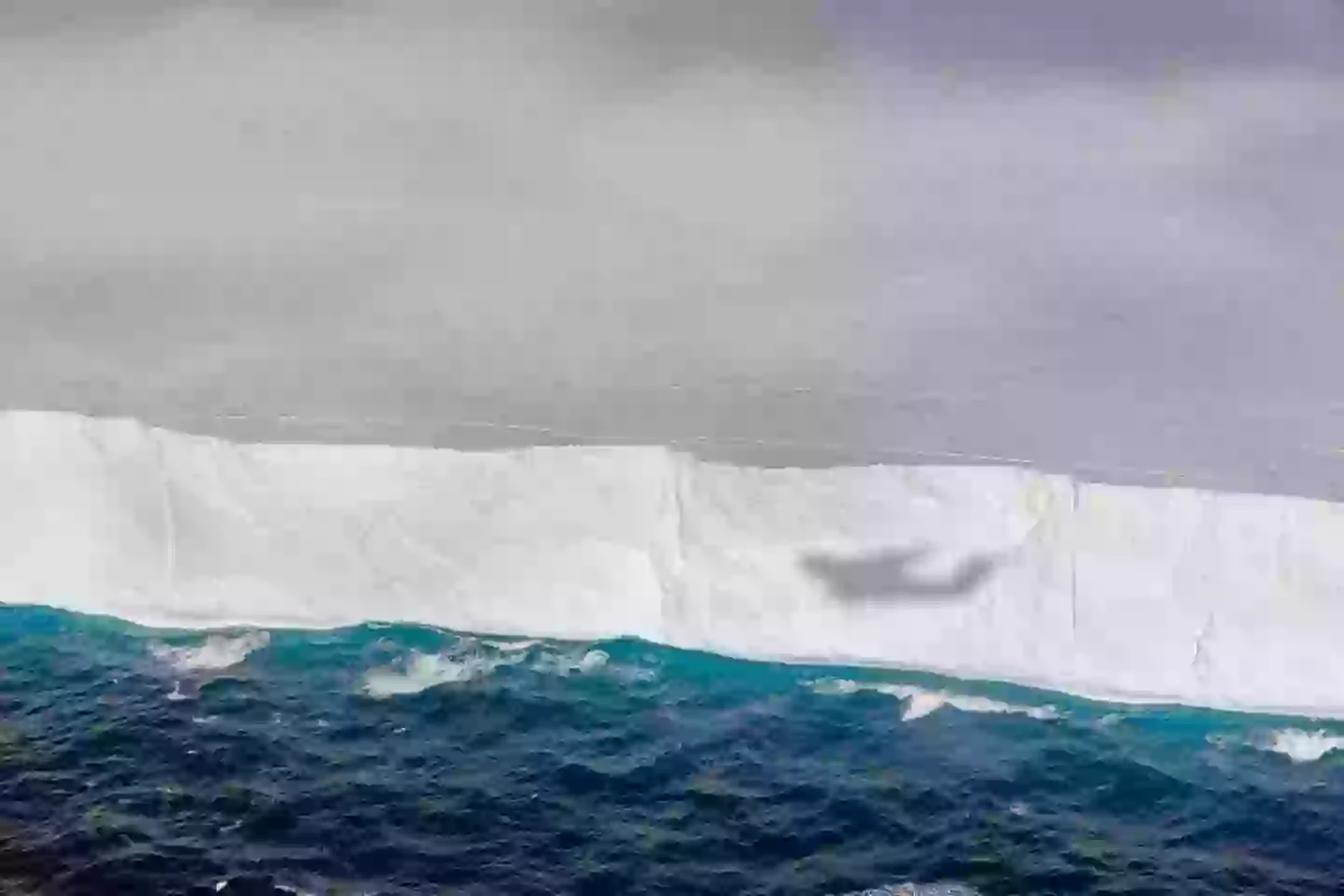
Why Is A23a Collapsing?
Dr. Andrew Meijers, a physical oceanographer at the British Antarctic Survey, explained that A23a had previously been trapped near a submarine mountain but is now moving with the prevailing ocean currents toward South Georgia. Although it hasn’t broken into smaller chunks like other megabergs in the past, its trajectory raises concerns about its future path.
Meijers said, “The iceberg is presently in a meander of the current and not moving directly towards the island, but our understanding of the currents suggests that it is likely to again move towards the island soon.” If the iceberg becomes stuck on the continental shelf, it could obstruct wildlife access to essential feeding grounds, which would have serious implications for the island’s ecosystem.
Urgent Calls for Action
This unprecedented event has sparked growing concern among environmental experts. The collapse of A23a could signal more rapid and uncontrollable shifts in the Antarctic region, with far-reaching effects on both local wildlife and the global climate system. Scientists are urging immediate attention to the situation as the iceberg continues its journey toward South Georgia, with devastating consequences for both the environment and the species that depend on it.