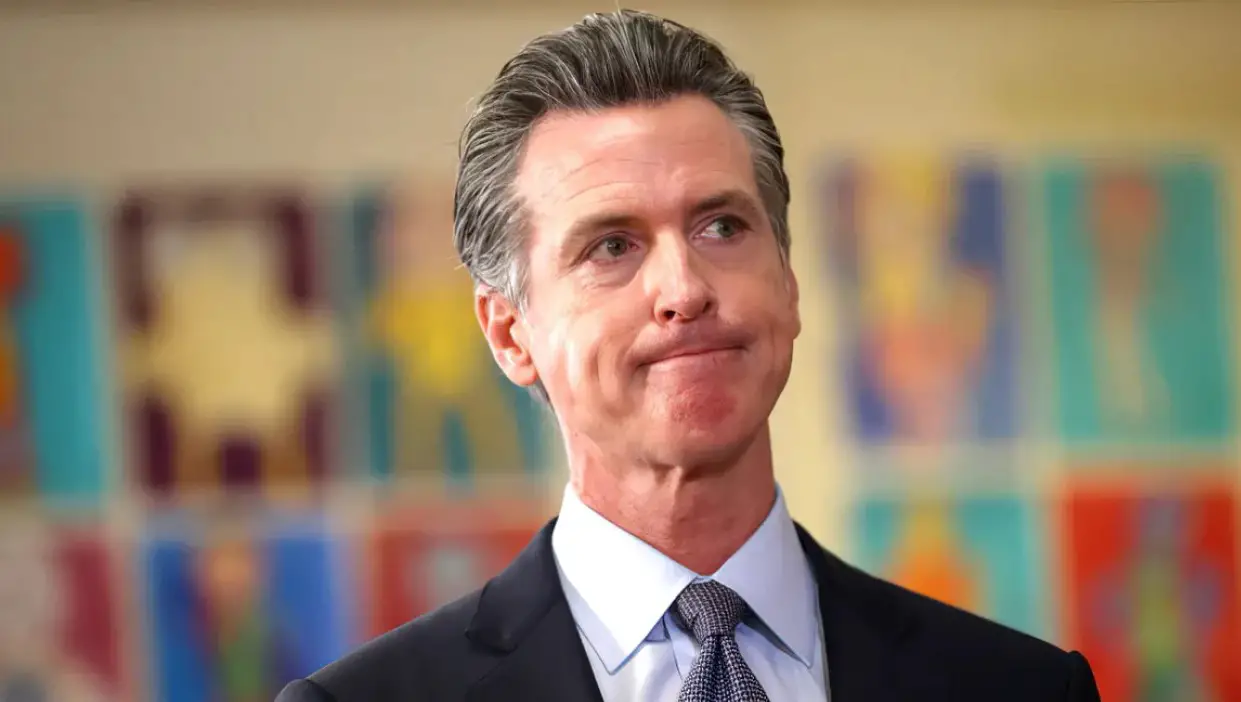
“California’s ‘Two State Solution’ could reshape America’s political map. This bold proposal aims to split the state into two, addressing urban-rural divides. Explore the implications for national politics.”
The Radical Solution That Could Redraw America’s Political Map Forever
In one of the boldest political proposals in modern American history, California Assembly Minority Leader James Gallagher has unveiled an idea that could dramatically alter not only California’s future but also reshape the nation’s political landscape. Gallagher’s proposal, known as the “Two State Solution,” seeks to divide California into two separate states, fundamentally changing the dynamics of governance, congressional representation, and national politics.
A Bold Proposal Born from Political Frustration
Gallagher’s proposal, officially known as Assembly Joint Resolution 23, stems from years of political frustration and a deepening divide between urban and rural communities in California. The plan would allow 35 inland counties to secede from the existing state and form a new one, potentially creating the 51st state in the Union. The new state would span the rural and agricultural heart of California, including regions like the Central Valley, Inland Empire, and Northern California, while leaving the coastal urban areas—such as Los Angeles, San Francisco, and San Diego—part of the original state.
“This proposal is about the forgotten people of California,” Gallagher said during the announcement. His words reflected the growing sense of alienation felt by residents of rural areas, who believe they have been marginalized by coastal elites who dominate the state’s politics.
The Constitutional Path and Historical Precedents
The legal foundation for Gallagher’s proposal is Article IV, Section 3 of the U.S. Constitution, which allows for the creation of new states from existing ones. However, this process is historically challenging, requiring approval from both the state legislature and Congress. This hurdle has made the creation of new states a rare occurrence in U.S. history. The last successful secession was in 1863 with the formation of West Virginia during the Civil War.
The proposal’s language attempts to frame the division as a democratic move rather than a partisan one. It emphasizes the growing disparity between California’s densely populated urban regions and its vast rural areas, which have become increasingly isolated from the political process.
The Growing Urban-Rural Divide in California
The proposed new state represents a response to the political divide between California’s coastal urban areas, which dominate state politics, and the more conservative, rural inland regions. California’s urban centers, particularly the San Francisco Bay Area and the Los Angeles metropolitan area, lean heavily Democratic, while inland counties are more conservative and Republican-leaning.
Gallagher has highlighted several issues that exacerbate the divide, such as rising housing costs, burdensome regulations, and environmental policies that impact rural industries. “It’s time to secede from California because of a Legislature that has done nothing to make the state more affordable,” Gallagher declared. His remarks underscore the frustration felt by many rural residents who believe that policies in Sacramento cater primarily to urban interests.
Political Strategy and Redistricting Context
The timing of Gallagher’s proposal is crucial, as it coincides with the upcoming Proposition 50, a California ballot measure that seeks to redraw congressional districts to benefit Democrats. Gallagher has framed his proposal as a response to this partisan maneuver, arguing that it would further marginalize rural voters by diminishing their political representation.
The creation of a new state could also have significant implications for national politics. With two new U.S. Senate seats and a redistribution of congressional seats, the new state could shift the balance of power in Washington. Depending on the political orientation of the new state, it could influence presidential elections by adding additional electoral votes.
Economic Considerations and Practical Challenges
While the proposal has political appeal, it also raises questions about the economic viability of a new state. The proposed new state would encompass some of the country’s most productive agricultural regions, including the Central Valley and Inland Empire, which are essential to the national food supply and logistics. These regions also contain significant natural resources, including timber and renewable energy potential.
However, the new state would also face economic challenges, particularly in terms of infrastructure and tax revenues. Many of the included counties are economically disadvantaged, and creating a new state would require substantial investments in government institutions, education, and infrastructure.
Water rights and access to resources are also significant concerns. The proposed new state would control much of California’s agricultural water usage, which would likely result in complex negotiations over water allocation and other critical resources.
The Future of California and U.S. Politics
Gallagher’s proposal could set a precedent for other states facing similar urban-rural divides. States like New York, Illinois, and Washington could see similar secession movements if California’s effort succeeds. Additionally, the creation of new states could reshape the political landscape by altering the balance of power in Congress and the Electoral College.
While the proposal faces significant obstacles, including partisan opposition and the complex process of state division, it reflects the growing political polarization and frustration with traditional democratic processes. Whether or not the “Two State Solution” succeeds, it underscores the challenges facing American federalism and the increasing pressure for more radical solutions to address political disenfranchisement.
Conclusion: A Radical Remedy for an Increasingly Divided Nation
Gallagher’s proposal to split California into two states is a bold and radical solution to the political and economic challenges facing the state. Whether it can overcome the political, legal, and practical obstacles is uncertain, but it signals a growing sentiment among rural communities that their concerns are not being addressed.
As America becomes more politically divided, the California “Two State Solution” may be seen as either a necessary step toward political reform or a dangerous precedent for further fragmentation. The outcome will depend on whether the proposal can gain enough support to navigate the complex legislative and constitutional processes required for its success.