South Park creators Trey Parker and Matt Stone use the ‘small-penis rule’ to potentially avoid a legal challenge from Donald Trump after their controversial episode. Here’s how it works.
South Park has never shied away from controversial satire, and their latest episode featuring Donald Trump is no exception. The show’s creators, Trey Parker and Matt Stone, have stirred the pot yet again with an episode that has left many wondering whether a potential lawsuit from the former president could follow.
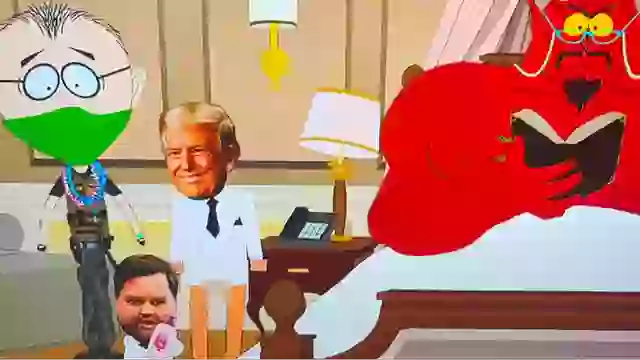
In the episode titled “Sermon on the Mount,” Trump is depicted in a rather unflattering light, showing him naked in bed with Satan. The image of Trump’s face is placed on a 2D figure, which, unsurprisingly, includes a depiction of a small penis. The scene quickly became a talking point, sparking speculation about how Trump might respond legally to such a portrayal.
The ‘Small-Penis Rule’: How It Could Protect South Park
Legal experts have pointed out that South Park’s use of Trump’s anatomy in the episode could actually shield the creators from potential litigation. This is because, in order to file a defamation lawsuit, Trump would have to confirm the accuracy of the description of his penis. In other words, if Trump were to take legal action, he would have to prove that the depiction was both false and made with malicious intent.
This would create a tricky situation for the former president, who would have to either deny or confirm the claim, which could further fuel the controversy. In essence, the “small-penis rule” becomes a defense mechanism: by introducing a highly personal and potentially unverifiable claim, South Park makes it harder for Trump to prove harm in court.
Trump’s Reaction and the Backlash
Despite the legal defense, Trump’s spokesperson, Taylor Rogers, was quick to criticize South Park and its creators. “The Left’s hypocrisy truly has no end,” Rogers stated, accusing the creators of running out of ideas and trying to gain attention through controversial content. He also doubled down on Trump’s political accomplishments, emphasizing his rapid success in office despite the show’s criticisms.
However, during a Comic-Con International panel in San Diego, Trey Parker did offer an apology, although it was unclear whether this apology was in reference to the Trump episode or an earlier South Park satire of the BP oil spill. The ambiguity surrounding the apology has left many speculating about the true intention behind the creators’ remarks.
JD Vance’s Cameo in the Episode
In addition to the depiction of Trump, JD Vance also made an appearance in the episode. In typical South Park fashion, the portrayal of the Ohio Senator was comical and exaggerated, showing him as a miniature version of himself waiting on Trump as a servant. Vance took the portrayal in stride, posting on social media: “Well, I’ve finally made it,” acknowledging the satire with good humor.
The Legacy of South Park’s Political Satire
For over 20 years, South Park has been a cultural force, often tackling controversial political issues with humor and irreverence. The show has made its mark on American satire, featuring harsh critiques of politicians from both sides of the aisle. Whether or not Trump decides to pursue legal action, this latest episode proves that South Park will continue to push boundaries and challenge political figures.
Conclusion: A New Dimension in Political Satire
The controversy over South Park’s depiction of Donald Trump raises important questions about the intersection of satire, free speech, and defamation law. With the introduction of the “small-penis rule,” the show has found an inventive way to defend itself against legal repercussions while continuing its tradition of political satire. As the legal and cultural landscape evolves, it will be fascinating to see how future episodes of South Park navigate these complex issues, especially with the ever-growing role of social media and public opinion in shaping political narratives.