Donald Trump’s recent claim of being called the “President of Europe” by European leaders has sparked controversy and denial. Explore the implications for US-Europe relations and modern diplomacy.
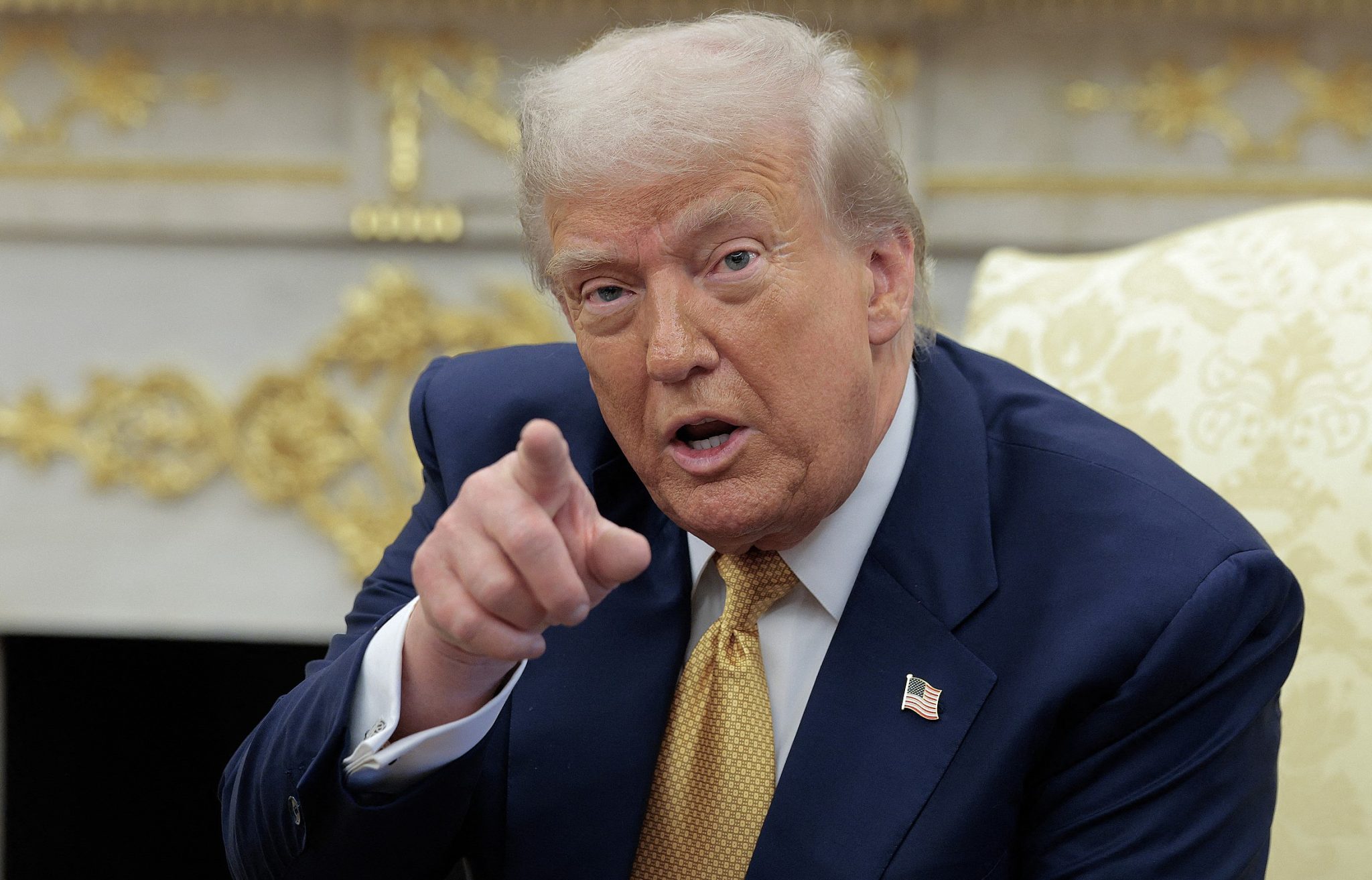
A seemingly casual comment made by President Donald Trump has ignited a diplomatic controversy that has reverberated across the Atlantic. During a routine briefing on August 25, 2025, Trump claimed that European leaders had jokingly referred to him as the “President of Europe,” a title that has quickly become the subject of intense debate and ridicule.
The comment has sparked a wave of reactions from European officials and citizens, who were swift to deny the claim. Many viewed Trump’s assertion as not only inaccurate but also a misrepresentation of European sentiments toward American leadership. This controversy has highlighted growing tensions in transatlantic relationships, particularly as Trump continues his efforts to broker a peace agreement between Russia and Ukraine.
The Context Behind Trump’s Remark
Trump’s assertion about the “President of Europe” came just days after a historic diplomatic gathering at the White House. On August 18, 2025, Trump hosted European heads of state and government, including leaders like French President Emmanuel Macron, German Chancellor Friedrich Merz, and NATO Secretary-General Mark Rutte, for critical talks about the ongoing Ukraine conflict.
The meeting, which included a range of European leaders, was seen as an important step in international diplomacy, particularly in light of the ongoing war between Russia and Ukraine. Trump had held a previous meeting with Russian President Vladimir Putin in Alaska, which he characterized as productive, setting the stage for a more ambitious diplomatic effort involving European leadership.
In the aftermath of the meeting, Trump made the bold claim that he had been given the title “President of Europe” by European leaders, suggesting a level of camaraderie and respect that seemed to defy the broader public sentiment toward his administration.
The Immediate European Response: Swift Denial
The European response to Trump’s claim was quick and unequivocal. European officials, both public and anonymous, took to social media platforms to reject the assertion, with many expressing disbelief and even frustration. One user from Europe stated, “As a contributor, currently sitting in Europe, I’d like to confirm that we don’t call him that. At all. Ever.” Another response from Europe was more direct: “Europe here HELL NO we don’t!”
The rejection was not only about the title but also about the broader context of Trump’s relationship with Europe. According to recent polling, 51% of Europeans view Trump as an “enemy of Europe,” reflecting the deep divide between European public opinion and Trump’s self-perception as a globally respected leader.
A Clash of Diplomacy and Public Perception
Trump’s claim also underscores a larger issue: the gap between private diplomatic conversations and public political realities. While Trump may have been engaging with European leaders behind closed doors, the reality of European public sentiment towards his leadership remains largely negative. His administration’s handling of issues like NATO funding, climate change, and trade relations has contributed to this unfavorable view.
The “President of Europe” incident also highlights the role of social media in modern diplomacy. In the past, denials or contradictions of such claims would likely have come through formal diplomatic channels over time. Today, however, social media allows for an immediate, often unfiltered response that can quickly reshape the narrative.
The Future of Diplomatic Communication: Fact or Fiction?
The controversy raises several questions about the nature of truth in diplomacy and the challenges of accurately communicating diplomatic interactions. Could Trump’s claim be based on informal remarks made by European leaders during private conversations, misinterpreted by the president? Or was the comment a strategic attempt to bolster his international image and appeal to his base?
One possibility is that European leaders, during their meeting with Trump, may have made humorous or sarcastic remarks that he misunderstood as genuine praise. Diplomatic humor, particularly in high-stakes meetings, is not uncommon, but it can easily be misinterpreted or blown out of proportion.
Alternatively, Trump may have been attempting to shift the narrative around his global influence, presenting himself as an important figure in Europe’s diplomatic efforts. His assertion of being called the “President of Europe” could be a strategic move to counter the perception of his international unpopularity.
Implications for Transatlantic Relations
Regardless of the truth behind Trump’s claim, the incident sheds light on the complexities of US-European relations in the digital age. The immediate and widespread European rejection of the title demonstrates the challenges facing American leadership in Europe and the difficulties in reconciling public and private diplomatic efforts.
For Trump, the controversy underscores a significant challenge to his narrative about global respect and admiration. European leaders, while engaging with him diplomatically, may not share the same public sentiments, and the backlash to his claim is a clear indication of this disconnect.
For European leaders, the incident complicates their already delicate relationship with Trump. While they may privately engage with him on critical issues, publicly, they are faced with the task of distancing themselves from his more controversial claims in order to maintain credibility with their constituents.
Conclusion: A Diplomatic Fumble or Strategic Play?
The “President of Europe” controversy has exposed the tensions between private diplomacy and public perception, highlighting the challenges of modern international communication. Whether Trump’s claim was a diplomatic misstep, a misunderstanding, or a deliberate attempt to project strength remains unclear. What is certain is that the incident has sparked a global conversation about leadership, influence, and the role of social media in shaping international relations.
As Europe grapples with the ongoing Ukraine conflict and the future of its relations with the United States, the fallout from Trump’s comments serves as a reminder of the delicate balance of diplomacy in the digital age. The true implications of this controversy may unfold over time, but for now, it underscores the complexities of modern global leadership and the blurred lines between perception, reality, and political strategy.