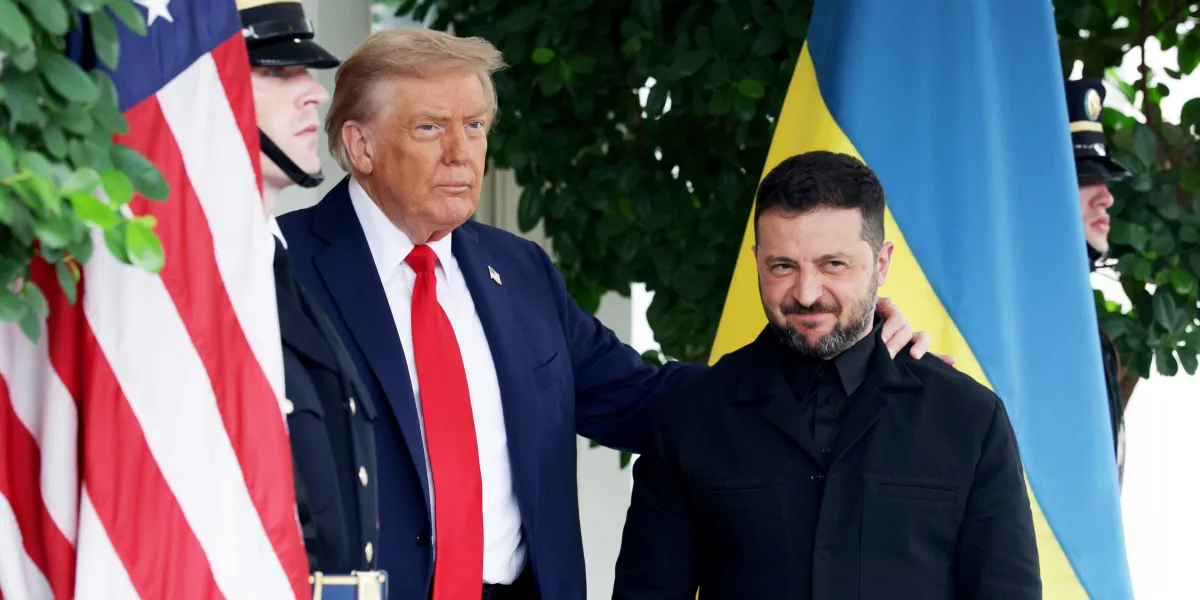
Ukrainian President Volodymyr Zelenskyy’s new black suit, crafted by longtime designer Viktor Anisimov, is more than just a fashion choice—it’s a symbol of resilience and diplomacy. Discover the story behind his latest look.
Ukrainian President Volodymyr Zelenskyy made a striking appearance at the White House on August 18, 2025, dressed in a sharp black suit that turned heads for more than just its sleek tailoring. The suit, designed by his longtime collaborator Viktor Anisimov, symbolizes not just his personal style but also Ukraine’s strength and dignity amid wartime.
Zelenskyy’s renewed collaboration with Anisimov was a moment of reflection and reinvention. The designer, who first worked with Zelenskyy back in the early 2000s, explained that the look was part of a careful balance between military precision and fashion polish. Anisimov shared exclusive details of how this partnership has evolved over the years, with a focus on black, a color symbolic of strength and resilience, for Zelenskyy’s wartime wardrobe.
A Longtime Collaboration
Anisimov’s connection to Zelenskyy dates back to the early days of the Kvartal 95 comedy team when Zelenskyy was an actor and artistic director. As the team transitioned away from their informal stage costumes, they sought a designer who could create a more polished look. It was then that Anisimov was introduced to Zelenskyy through Lena Kravets and Ira Pikalova. The partnership began with stylish but practical clothing choices, setting the stage for the tailored looks we now associate with Zelenskyy’s public appearances.
Years later, as Zelenskyy’s political career took off, the designer was called upon again, this time to refine the president’s image for the global stage. “If you don’t understand something, you ask,” Anisimov recalled of his work with Zelenskyy. The new suit was a continuation of that relationship—one that combined military style with a touch of fashion.
Symbolism in Simplicity: The Black Suit
The choice of black was significant, as Anisimov explained, not just as a personal favorite but also as a practical and symbolic choice. “Black satisfied everyone,” he said, emphasizing the clean lines and military influence behind the design. This wasn’t just a suit for public appearances—it was a message. Zelenskyy had already worn khaki for military meetings and cabinet discussions, but for more formal occasions, he needed something different. “If not khaki, then black,” the president said, and the suit was born.
Anisimov’s craftsmanship involved using mostly Ukrainian fabrics, with one exception: a Japanese cotton blend used for a suit worn by Zelenskyy at high-profile events, including the Pope’s funeral and NATO summit. The fabric was described as “canvas for painting, but thinner,” offering a dense, textured finish that was as beautiful as it was functional.
A Suit for Diplomacy and Resilience
Zelenskyy’s visit to the White House, and his choice of this formal suit, carried a deeper message, one that extended beyond fashion. Designer Elena Gasanova, who also works with the president’s image, noted that the suit was meant to convey a sense of strength, resilience, and openness to diplomacy. In wartime, the suit helped project Ukraine as an equal among world leaders—assertive, confident, and dignified.
For Zelenskyy’s wife, First Lady Olena Zelenska, the choice of the suit was also deeply personal, reflecting her husband’s strength during such a critical time. It was a joint effort—between the president, his designer, and the First Lady—to create a visual statement that was both a sign of resilience and a tool of diplomacy.
A Global Symbol of Strength
The black suit worn by Zelenskyy at the White House wasn’t just a garment—it was a deliberate statement. Behind the stitching was a message of resilience, unity, and Ukraine’s ongoing struggle for sovereignty. The careful styling, with Anisimov’s precision and Gasanova’s symbolism, helped convey to the world that even in times of war, presentation and diplomacy are vital. Zelenskyy’s style continues to evolve, balancing his role as a wartime leader with his ability to connect with the global community.