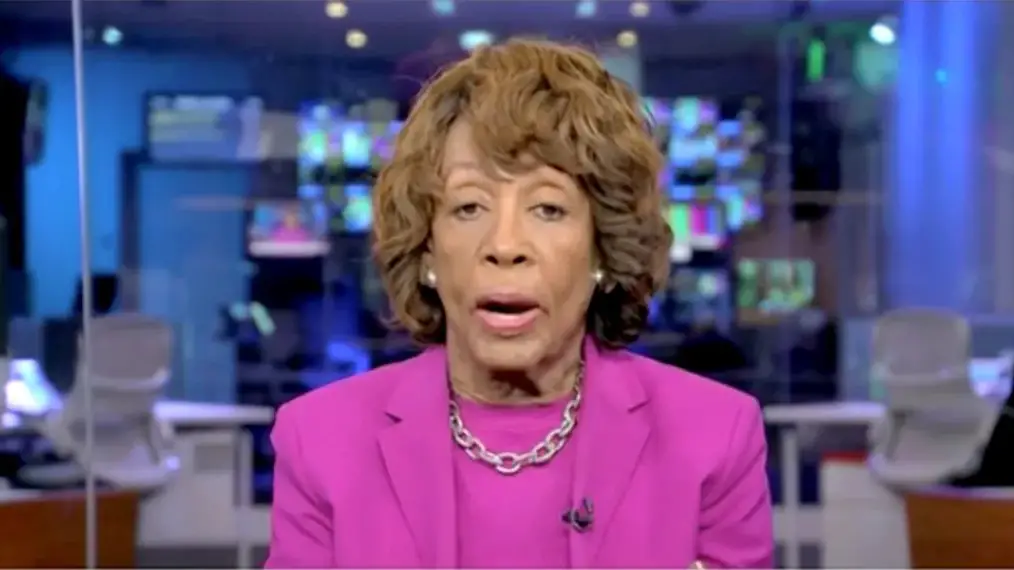
Maxine Waters’ recent appearance on MSNBC to discuss presidential fitness for office took an unexpected turn after she mistakenly referenced “Article 25” instead of the 25th Amendment, sparking outrage and criticism.
In the fast-paced world of American politics, where every word is scrutinized, even the most experienced legislators can slip up in ways that quickly undermine their intended message. Such was the case with Representative Maxine Waters of California during a live appearance on MSNBC, which quickly spiraled into controversy due to a major constitutional error.
Waters, who is known for her passionate and outspoken advocacy, appeared on the segment on August 30, 2025, to voice concerns about President Donald Trump’s fitness for office and call for constitutional action in light of recent decisions. However, the veteran congresswoman’s argument about the dangers of presidential behavior was overshadowed by a fundamental mistake when she referred to “Article 25” of the U.S. Constitution, instead of the correct reference to the 25th Amendment.
The Television Appearance That Sparked Controversy
Waters was on MSNBC to discuss President Trump’s decision to dismiss Federal Reserve Governor Lisa Cook, a move that Waters called both economically dangerous and self-serving. She intended to draw attention to the potential economic impacts of Trump’s actions, especially on the Federal Reserve’s independence, and to advocate for the invocation of the 25th Amendment to assess the president’s fitness for office.
“I would suggest that we move very aggressively to talk about the danger to this country and to our democracy and not play around with this because this is absolutely one of the most destructive things that this president could do,” Waters stated passionately.
However, in making her case, Waters referred to “Article 25” of the Constitution, which does not exist. The 25th Amendment, which she clearly intended to reference, was ratified in 1967 and outlines procedures for addressing presidential incapacity, including the ability to remove a sitting president if they are deemed unable to perform their duties.
Understanding the Constitutional Error
The U.S. Constitution consists of seven articles, and the 25th Amendment is one of the 27 amendments added later. Waters’ mistake—referring to a non-existent “Article 25”—was not only a slip of the tongue, but a misstep that raised questions about her grasp of constitutional structure, especially for a senior member of Congress who has sworn an oath to uphold the Constitution.
The 25th Amendment, rather than “Article 25,” is what allows for the removal of a president due to incapacity, and Waters’ incorrect reference gave her political opponents easy ammunition to question her credibility and competence.
The 25th Amendment’s Actual Provisions
The 25th Amendment provides mechanisms for dealing with presidential incapacity. Section 4, which Waters likely intended to invoke, allows the Vice President and a majority of the Cabinet to declare a president unfit to serve, transferring presidential powers to the Vice President temporarily. However, this procedure requires a high threshold and is meant to be used in cases of genuine incapacity, not political disagreements.
Despite Waters’ passionate concerns about Trump’s behavior, her mistake shifted the focus from the substance of her argument about the economy and presidential accountability to her fundamental misunderstanding of the U.S. Constitution.
Waters’ Economic Arguments and Their Merit
Despite the constitutional error, Waters raised several valid concerns about Trump’s decision to dismiss Federal Reserve Governor Lisa Cook. The Federal Reserve is intended to operate with significant independence from political pressures, and the potential conflicts of interest that Waters outlined were not without merit. Waters expressed concern that Trump could be undermining that independence by removing a key official for potentially political reasons, which could destabilize the economy.
As a senior member of the House Financial Services Committee, Waters has extensive knowledge of economic policy, and her concerns about the potential fallout from Trump’s actions are grounded in real issues, even if overshadowed by her constitutional mistake.
The Social Media Response and Political Implications
OFFICIAL! Maxine Waters has been BROKEN by Trump!
She says we need to invoke “Article 25” against Trump.
Too bad she didn’t realize that it’s the 25th Amendment.
LMFAO!pic.twitter.com/pPNWNg8sni
— Gunther Eagleman™ (@GuntherEagleman) August 30, 2025
Waters’ error quickly became viral content on social media, with critics mocking her blunder and questioning her ability to accurately discuss complex constitutional matters. Many pointed out the irony of calling for the invocation of the 25th Amendment while simultaneously making a basic mistake in referencing the Constitution.
“Mentally unstable Maxine Waters wants to invoke ‘Article 25’ of the Constitution because she says Trump is mentally unfit for office. ‘Something’s wrong with this president!’” wrote one critic on social media, highlighting the contradiction between Waters’ argument and her error.
The incident demonstrated how quickly political errors can spread in today’s media environment, overshadowing substantive policy concerns and distracting from the message.
The Political Weaponization of Constitutional Errors
The rapid spread of criticism shows how quickly constitutional errors can be weaponized by political opponents. Such mistakes are often exploited to question the competence of lawmakers, especially when they are addressing complex issues like presidential fitness for office. Waters’ error became a focal point for critics, diverting attention from her concerns about Federal Reserve independence and the broader implications for the economy.
The Future of 25th Amendment Discussions
Despite the mistake, the discussion surrounding the 25th Amendment is an important one. The high bar for invoking the amendment ensures it is not used for political disagreements but only in cases of genuine presidential incapacity. Waters’ error highlights the importance of precise language and understanding when discussing such complex legal provisions.
As debates around the 25th Amendment continue, it will be crucial for lawmakers to distinguish between genuine incapacity and political disagreements to ensure that the provisions of the amendment are not misused or misunderstood.
Conclusion: The Cost of Constitutional Confusion
Maxine Waters’ reference to the non-existent “Article 25” serves as a cautionary tale about the importance of constitutional literacy for elected officials. While her concerns about the economy and presidential power were valid, the error undermined her credibility and provided political opponents with an opportunity to mock her and shift the focus away from her arguments.
This incident underscores the need for lawmakers to be well-versed in the constitutional framework they are tasked with upholding. In an era where every mistake is amplified and scrutinized, accuracy and attention to detail are critical for effective political communication and maintaining public trust.