A teacher’s unexpected discovery of a student’s hidden pain leads to a powerful intervention, saving his life and giving him and his mother the chance for a healthier future. This story sheds light on the signs of child abuse in the classroom.
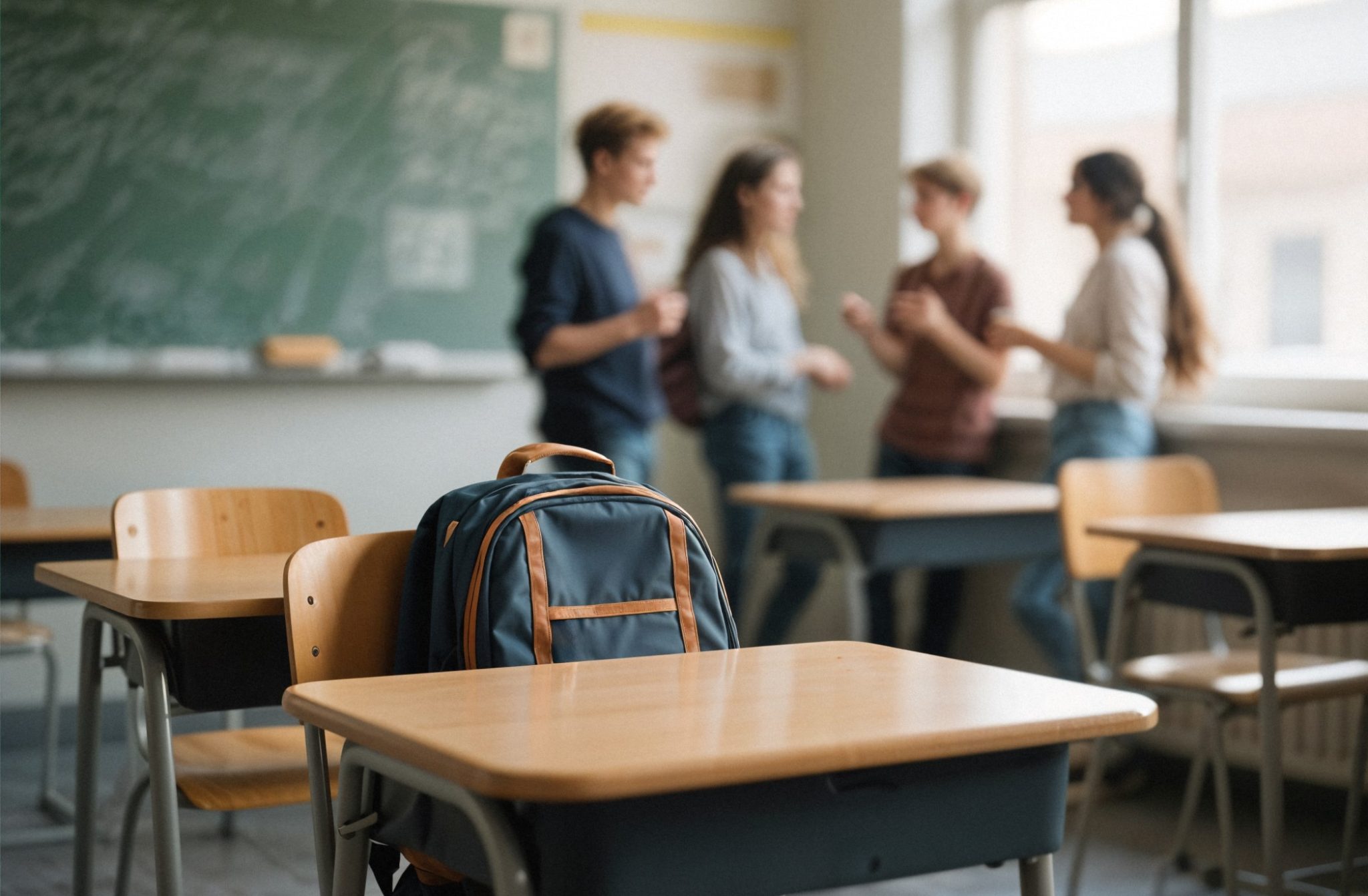
On March 14th, the morning started like any other in my fifth-grade classroom at Roosevelt Elementary School. With over twenty-three years of experience in teaching, I had perfected my routine for managing a classroom full of energetic ten and eleven-year-olds. That day, we were tackling long division, a challenging concept for many students, but I had developed effective methods to ensure comprehension through visual aids and hands-on activities.
The students filed in, ready to begin their day. Among them was Daniel Ramirez, a quiet, well-behaved student who always followed the rules. He wasn’t the top of the class, but he wasn’t struggling either. Daniel was polite, attentive, and completed his assignments without issue—until that Tuesday morning.
The Unexpected Behavior
As I began the lesson, Daniel’s behavior caught me off guard. He stood up in the middle of class without asking permission or raising his hand. I gently asked him to sit down, assuming it was a minor distraction. But this wasn’t a one-time occurrence. Every few minutes, Daniel stood again, looking uncomfortable, almost as though he was trying to get relief from something.
I initially thought it was attention-seeking behavior or perhaps testing boundaries, as many children do. However, as the pattern continued, I began to notice that Daniel didn’t seem to be enjoying the attention. He appeared distressed and frustrated by his own inability to remain seated.
A Teacher’s Instincts Kick In
As the class progressed, Daniel’s discomfort became more evident. He wasn’t smiling or acting out; he was simply struggling to stay still. I realized that something deeper was at play, something that went beyond typical classroom behavior.
After the class, I asked Daniel to stay behind so we could talk. His posture was slumped, and he looked nervous. I approached him with the goal of understanding what was happening, offering him the opportunity to share his feelings in a safe space.
The Heart-Wrenching Truth
What Daniel told me in those quiet moments after the class ended would change everything. “It just hurts to sit, Mrs. Patterson. It really, really hurts,” he said softly, tears welling up in his eyes.
My heart sank. I had suspected something was wrong, but hearing him say those words was devastating. I gently pressed for more details, asking if he had been injured or if something had happened. Daniel hesitated, then confessed through his tears that the pain wasn’t from an accident—it was from his stepfather, who had been hurting him for some time.
“My stepfather… he hits me with his belt,” Daniel explained, breaking down into sobs. “He gets really mad when I don’t do things right.”
Taking Action: The Path to Safety
In that moment, I knew I had to act. I reassured Daniel that no one had the right to hurt him and that he was incredibly brave for speaking up. I immediately contacted Maria Santos, the school social worker, who had the training to handle cases of suspected child abuse. Together, we began the process of ensuring Daniel’s safety.
The details that emerged were harrowing. Daniel’s stepfather had been physically abusing him for over two years, using the belt and other objects as punishment for minor mistakes. The abuse had recently escalated, explaining why Daniel was now physically unable to sit for long periods in class.
The Ripple Effect: Changing Lives
Within hours, social workers and the Department of Children and Family Services arrived at the school to interview Daniel and begin securing his safety. The investigation revealed the full extent of the abuse Daniel had endured, and police arrested his stepfather on charges of child abuse and domestic violence. Daniel was placed with his maternal grandmother, while his mother, Carmen, received support and legal assistance.
Daniel’s case sparked important changes at our school, too. Teachers were given enhanced training on identifying signs of abuse and following proper intervention protocols. This experience reinforced the idea that sometimes the signs of trauma in children are subtle, hidden beneath behavior that may be misunderstood as mere disruption.
The Healing Process
As Daniel and his mother began their journey toward healing, the changes in him were remarkable. Once a quiet, withdrawn child, Daniel began to thrive in school. His academic performance improved, not because he was suddenly smarter, but because he was no longer carrying the weight of fear and abuse. He could focus on learning, not just surviving.
The physical healing took time, but soon, Daniel was sitting comfortably in class again. He became more confident and engaged in school activities. The emotional scars would take longer to heal, but with the support of counselors and a newly supportive environment, Daniel was on the path to recovery.
Carmen, too, began her own healing process. With the help of victim advocates, she was able to rebuild her life, pursue her education, and regain her independence. Together, she and Daniel found strength in each other and in the support network they were now a part of.
The Power of Intervention
Daniel’s story serves as a powerful reminder that behind every behavioral issue may be a child facing struggles no child should endure. His disruptive behavior in class wasn’t a cry for attention—it was a silent plea for help. His courage to speak up when he couldn’t hide his pain anymore saved his life, and in turn, saved his mother’s life.
As a teacher, I’ve learned that our role extends far beyond teaching academic subjects. We must create environments where children feel safe, heard, and valued. When we look beyond disruptive behavior and focus on the deeper struggles our students may be facing, we can make a profound difference in their lives.
Daniel’s journey is a testament to the importance of early intervention and the life-changing impact that support, love, and understanding can have on a child. It’s a story of resilience, hope, and the power of speaking out—even when it seems impossible.